
Defend Your Yard & Home From Different Kinds of Ants
Quick Article Overview:
- Identify your ant species first, since different species require different treatments.
- Baits eliminate colonies by targeting the queen, while sprays only kill visible workers.
- Remove what attracts ants, such as food sources, standing water, easy entry points, and outdoor nesting habitat.
- Carpenter ants can threaten your structure, so get a professional inspection if you suspect them in your home.
- The ant experts at Plant It Earth understand ant behavior and the best timing for Florida properties.
Your Essential Ant Information
If you’ve lived in Florida, you know that ants are a fact of life. They’re everywhere. In your kitchen. Your garden. Your garage. Marching across your patio.
It’s extremely frustrating. Florida’s warm, humid climate is inviting for ants. Unlike northern states where winter kills off populations, Florida’s ants thrive year-round. That means you’re dealing with a constant presence.
But before we get into specifics, here’s what you need to know:
Florida has multiple ant species, and they behave differently. What works against one might fail against another. Fire ants, ghost ants, and carpenter ants all require different strategies.
Identifying which ant you’re dealing with changes everything about your approach. Spending time on the wrong solution wastes weeks.
Eliminating food sources and entry points matters more than most people realize. You can kill every visible ant and still fail if you don’t address why they came in initially.
Some ants nest outdoors, while others nest inside your walls. This determines whether you’re dealing with a surface problem or something deeper.
Professional treatments become necessary when DIY approaches fail, the infestation is severe, or you’re dealing with carpenter ants threatening your home’s structure.
Why Florida Is a Paradise for Ants
We already covered how Florida’s warm climate and humidity mean ants never truly go dormant. Plus, they can establish colonies almost anywhere outdoors (and plenty of places indoors too).
After every rainy season, populations spike because conditions become perfect for rapid reproduction. Standing water, mulch, compost piles, and thick vegetation all serve as ideal ant habitats. If you’ve got a garden, a lawn, or any landscaping at all, ants are a real possibility.
Your home itself also provides everything ants need in terms of shelter, food, and water. They’re not choosy about entry points. If there’s a tiny crack in your foundation, a gap around a window, or a space where pipes enter the wall, ants can find it and exploit it.
The bottom line? Ants in Florida aren’t a temporary problem you solve once. They’re an ongoing management issue that requires understanding, strategy, and sometimes professional help.
Identify Which Ant You’re Dealing With
Different species of ants require different strategies for how to get rid of those ants.
Fire Ants
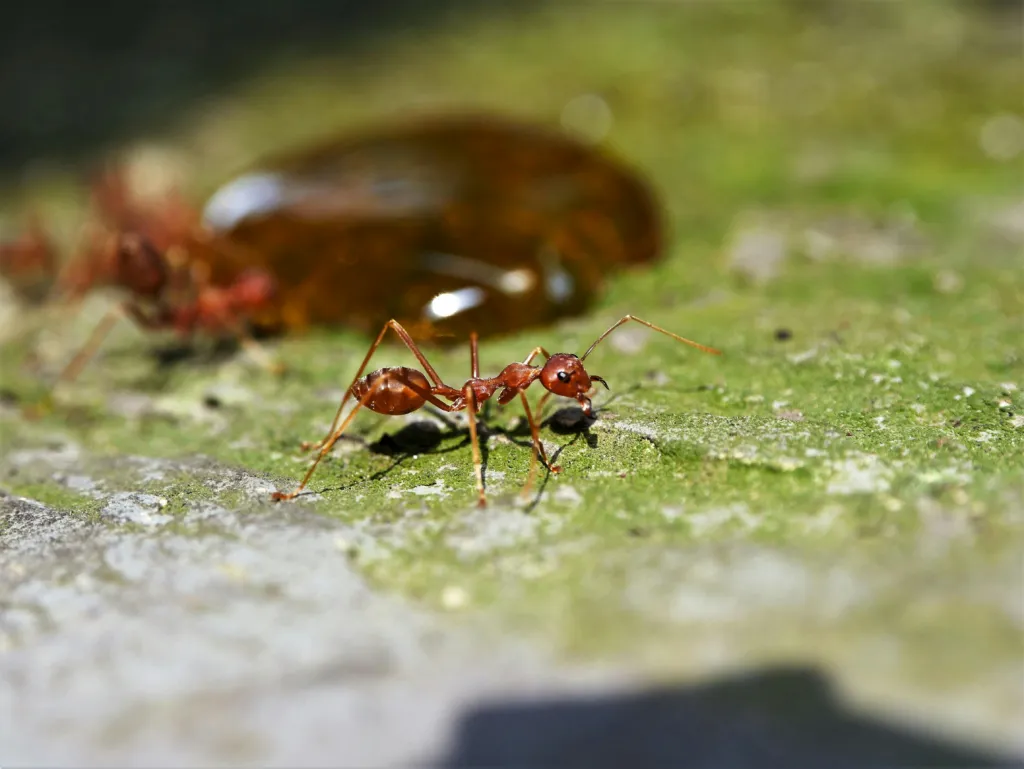
These are the most aggressive ones that you’ve probably encountered. They’re reddish-brown, medium-sized, and they nest in those distinctive mounds in your yard.
The real problem? Their bite delivers venom that causes painful welts and burning sensations. Some people have allergic reactions.
Fire ants are territorial and defensive. Disturb their mound and they swarm immediately. They’re also incredibly hardy and resistant to most DIY treatments.
Ghost Ants
These tiny, pale-colored ants seem to appear from nowhere. They’re fast movers and incredibly difficult to track. Ghost ants nest both indoors and outdoors, and they’re particularly attracted to kitchens and bathrooms.
The frustration with ghost ants is that you see them one day, apply a treatment, and they seem to vanish. Then they’re back two weeks later because you didn’t eliminate the actual nest.
Carpenter Ants
These are the ones that can worry homeowners the most. Carpenter ants are large (up to half an inch), usually black or reddish-black, and they tunnel through wood to create nesting galleries. Unlike termites, they don’t eat the wood. They just hollow it out.
You might see a few carpenter ants in your home before realizing you’ve got a serious problem developing inside your walls.
Other Common Florida Ants
Pharaoh ants are tiny and golden-colored. They nest in protected areas and can be absolutely maddening to control because they adapt quickly to treatments.
Thief ants are small, reddish, and primarily outdoor nesters, though they’ll occasionally venture inside.
Pavement ants create hills in sidewalk cracks and are generally just nuisance ants, though they can contaminate food.
How to Tell Which Ant Species You Have
Size matters. Fire ants are medium (about 1/8 inch). Carpenter ants are large (up to 1/2 inch). Ghost ants are tiny and pale. Pharaoh ants are even tinier.
Color provides clues too. Fire ants are reddish-brown. Carpenter ants are black or dark reddish-black. Ghost ants are pale. These aren’t foolproof identifications, but they’re starting points.
Where you see them tells you something. Large mounds in your yard? You need fire ant control. Trails of tiny ants in your kitchen? Probably ghost ants or pharaoh ants. Large ants coming from inside your walls? Carpenter ants.
If you’re genuinely unsure, take a photo of one and search online, or bring a sample to your local extension office. They can identify it accurately.
DIY Approaches That Do & Don’t Work
What Can Work
Ant baits. The ants need to take the poison back to the colony so it kills the queen and the entire nest. Baits work by being attractive enough that ants collect and transport them. This takes time (usually a week or two), but it actually eliminates the colony instead of just the visible ants.
For best results, place baits near ant trails, not necessarily at the mound itself. Ants use established highways, and placing baits along those routes increases the chance they’ll find and transport them.
Removing food sources and water. Ants came for a reason. If you’ve got crumbs, sticky surfaces, accessible pet food, or standing water, you’re maintaining a welcoming environment. Clean thoroughly. Store food in sealed containers. Fix leaky pipes. Don’t leave pet food sitting out overnight.
Sealing entry points. Walk around your home’s foundation and look for cracks, gaps, and spaces. Caulk what you can. This won’t prevent ants from entering forever, but it reduces available access points.
Eliminating outdoor nesting sites. Remove piles of wood, mulch, and yard debris where ants establish colonies. Store firewood away from your house. Keep gutters clean. Trim vegetation away from your home’s exterior.
What Won’t Work
Believe it or not, spraying the visible ants doesn’t solve anything. You’re killing workers, but the colony continues reproducing. So you’re addressing the symptom, not the problem.
Borax baits mixed haphazardly and left sitting around are dangerous, especially with pets and children. They also often fail because the concentration is wrong or you’ve placed them incorrectly.
Cinnamon, coffee grounds, and diatomaceous earth have their advocates, but they’re not proven solutions for established ant colonies.
When Professional Help Becomes Necessary
If you’re dealing with fire ants, ghost ants, or any established colony, professional treatment typically outperforms DIY efforts.
Professionals understand ant behavior. They know where different species nest and what baits actually work. They understand timing and application methods that amateurs often get wrong. They have access to stronger treatments that aren’t available over-the-counter.
For carpenter ants, this becomes critical. You need someone who can inspect your home’s structure, identify where they’re nesting, and eliminate them before serious damage occurs.
Ghost ants in your kitchen? Professionals know that you need to treat both the interior and the exterior simultaneously, and they understand which baits ghost ants actually prefer.
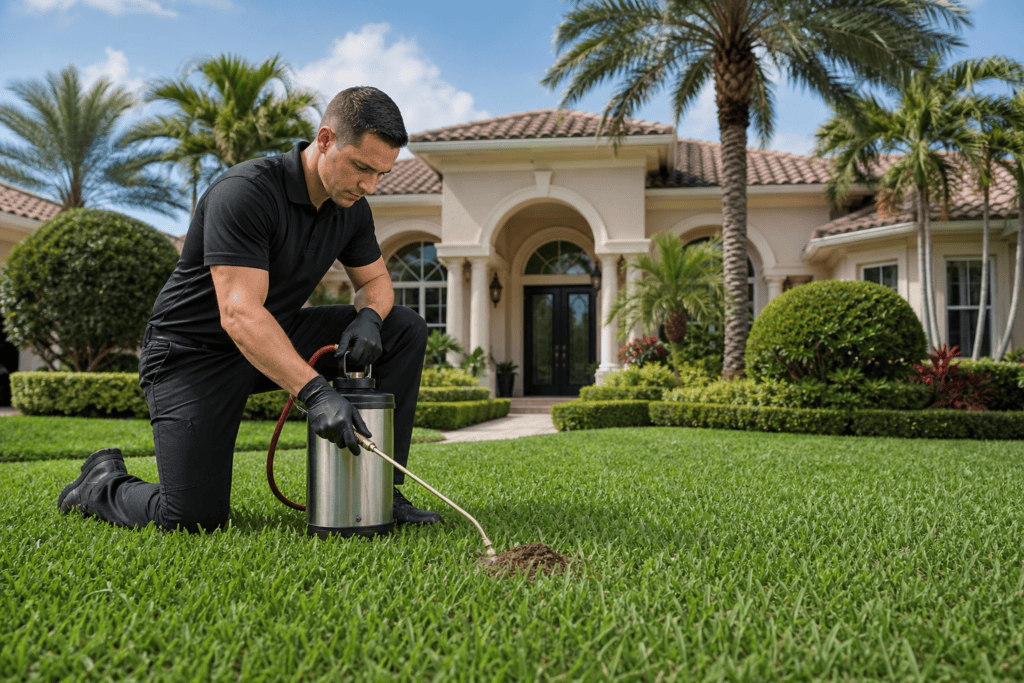
Fire ant mounds? A professional can treat your entire yard systematically rather than just the mound you’re looking at. They understand that fire ants are colonies, and incomplete treatment just leads to them re-establishing elsewhere.
Plant It Earth provides targeted ant control that starts with proper identification and customized treatment strategies. We don’t spray everything blindly. We address your specific ant problem with the approach that actually works.
Prevention: Keeping Future Infestations at Bay
Once you’ve eliminated your current ant problem, prevention becomes manageable.
Maintain a perimeter. Regular yard maintenance reduces suitable nesting habitat. Keep mulch pulled back from your home’s foundation (at least six inches). Trim vegetation. Remove deadwood and debris.
Fix moisture issues. Ants need water. Fix leaky pipes, ensure proper drainage around your foundation, and don’t overwater landscaping areas against your home.
Seal cracks and gaps. This is ongoing maintenance, not a one-time fix. Check your foundation, siding, and around windows regularly. Caulk any openings you find.
Store food properly. This prevents future infestations from taking hold. Sealed containers in a clean kitchen are far less attractive to ants than crumbs and open packages.
Keep garbage sealed. This seems obvious but matters more than people realize. Ants are attracted to food waste, and keeping your garbage in sealed containers significantly reduces that draw.
Be aware during rainy seasons. Florida’s rainy season pushes ants toward higher ground (your home). Increase vigilance during these periods.
Frequently Asked Questions About Florida Ants
Get Ants to Leave You Alone
Solving your ant problem may take time and patience. Being thorough matters since you need to identify the species correctly, eliminate what’s attracting them, clear the trails, bait the colony, treat the exterior, and seal the entry points.
Need help in your fight against fire ants and other lawn pests? Reach out to the local experts at Plant It Earth! We proudly provide lawn care and pest control services in Sarasota and lawn care and pest control services in Tampa. We’ve helped your neighbors enjoy picture-perfect lawns, and we can help you, too!