
Find Out All You Never Knew About These Winged Insects
In spring, they appear out of nowhere. Your porch is clear one morning and overrun with mayflies the next. If you’ve experienced this and had no idea why or how this happens to Florida homeowners, it’s time to get to know one of the strangest insects around.
The pest specialists at Plant It Earth in Tampa and Sarasota are breaking down everything worth knowing about these short-lived insects. That includes what mayflies look like, where they come from, how long they stick around, and if you should be worried about them.
Can Mayflies Hurt You?
The short answer is no. Adult mayflies have completely non-functional mouthparts. There’s no feeding mechanism, no stinger, no venom. Mayflies physically can’t harm you.
If you felt something nip you during a swarm, the real culprit was almost certainly a mosquito or midge sharing the same airspace. During thick swarms, it’s genuinely easy to confuse the two. After all, these insects often emerge around the same time and in similar conditions. But the bite definitely didn’t come from a mayfly.
Disease transmission isn’t a concern either. Mayflies carry no pathogens and have no mechanism for spreading illness. The worst-case scenario with a mayfly swarm is that they’ll tangle in your hair, coat your car, or leave a layer of dead bugs on your driveway that you’ll need to hose off.
Is What You’re Seeing Even Mayflies?
Mayflies are commonly misidentified, partly because their name is misleading. They’re actually not true flies at all but more closely related to dragonflies than to the common housefly or mosquito. You might also hear them called shadflies, lakeflies, or dayflies.
One thing that often surprises people is how ecologically significant these insects are, particularly in Tampa and Sarasota, Florida. Birds, fish, and bats all depend on mayflies as a primary food source.
Another interesting fact? Ecologists and water quality scientists track mayfly populations as a proxy for aquatic health. Why? Because a robust emergence is generally a sign that nearby water is clean and well-maintained.
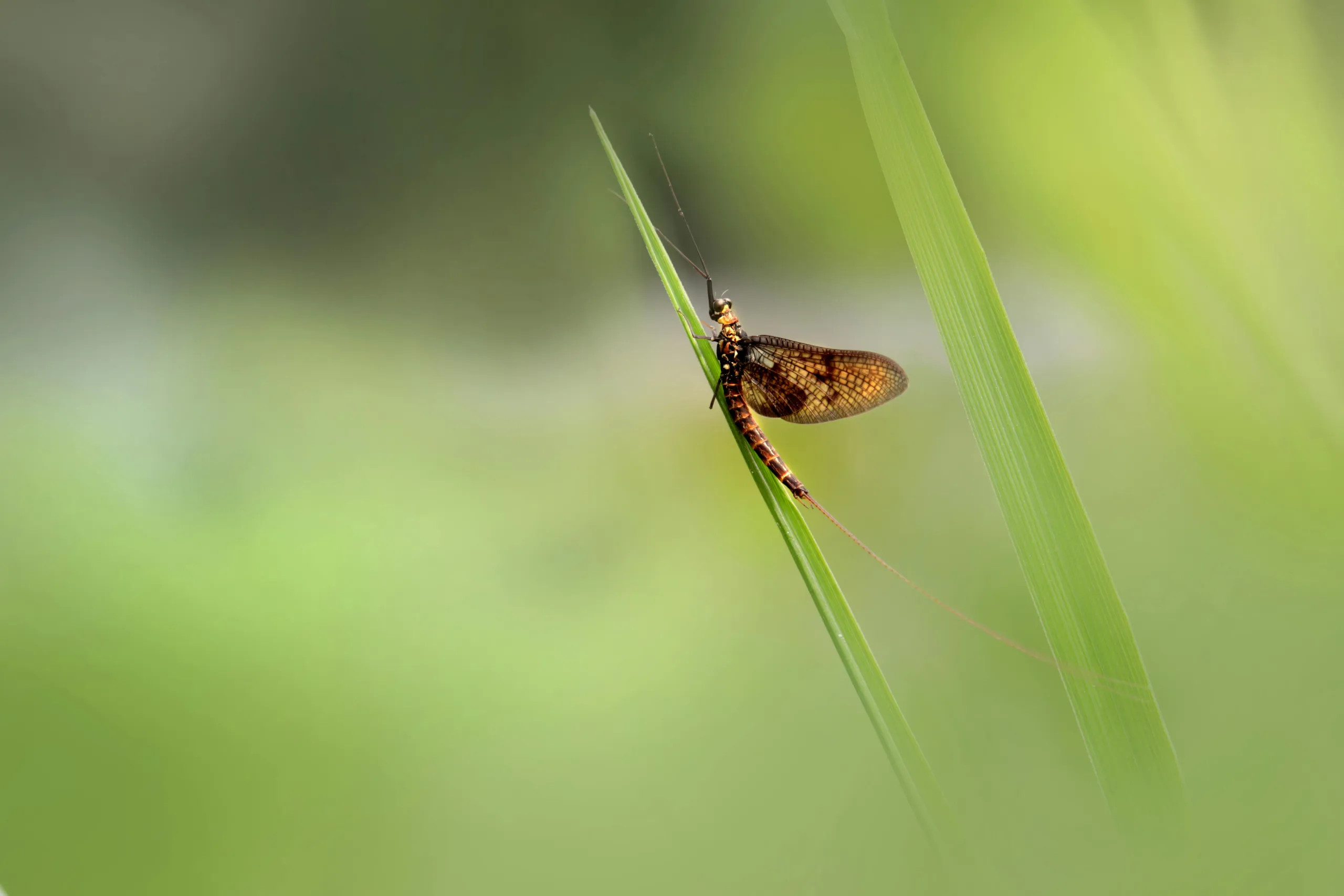
How to Tell If It’s a Mayfly?
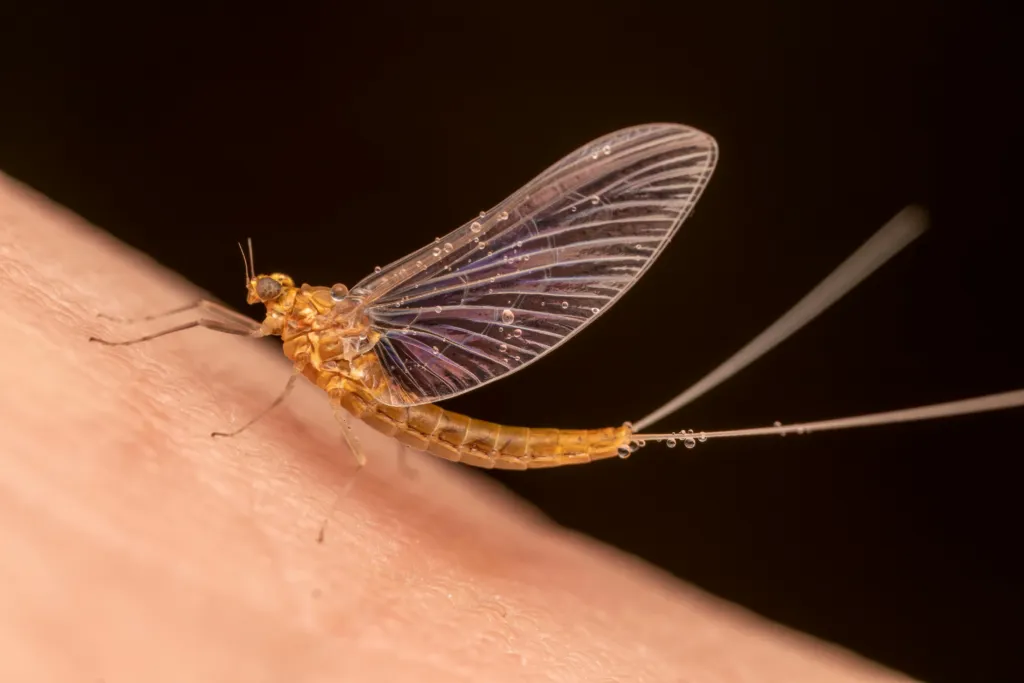
The wings are the most distinctive feature. Rather than lying flat against the body at rest, mayfly wings angle sharply upward in a peaked position. The long, wispy tail filaments extending from the abdomen are the other dead giveaway.
Crane flies and mosquitoes cause the most confusion:
- Mosquitoes have a slender, needle-like proboscis used for feeding. Mayflies have nothing like it.
- Crane flies are noticeably larger, with long dangling legs and wings that rest horizontally rather than in an upright peak.
- Mayfly nymphs (the immature stage) look completely different from adults. They’re broader, darker, and equipped with visible gill structures along the abdomen.
A few physical stats on adult mayflies:
- Size: roughly ¼ inch to just over 1 inch in length
- Four clear, veined wings held upright at rest
- Large, prominent compound eyes
- Slender body with a long, tapered abdomen
- Two or three trailing tail filaments
How Long Do Mayflies Live For?
The mayfly lifespan is a surprising one that not many people know about. The full story unfolds in two wildly unequal stages.
The nymph stage (underwater)
This is where the bulk of a mayfly’s life takes place, actually. Mayfly nymphs live submerged in rivers, streams, lakes, and ponds for anywhere from several months to two full years. During that time, they feed on algae, decomposing plant material, and organic debris, molting repeatedly as they develop through dozens of growth stages.
The adult stage (above water)
Then the clock starts, and it moves fast. Adult mayflies typically live between 12 and 48 hours. From the moment they emerge from the water, they no longer feed. Their digestive systems contain nothing functional. Every hour of the adult stage is devoted entirely to reproduction.
The strange takeaway? A mayfly spends the majority of its existence underwater, growing in relative obscurity, and then emerges to live out its entire adult life in what amounts to a long weekend.
The Life & Swarming of a Mayfly
It all begins with eggs deposited on or just beneath the water’s surface. Those eggs hatch into aquatic nymphs, which spend months or years developing in the sediment and water column. When environmental conditions align (water temperature, day length, and other seasonal cues) thousands of nymphs synchronize their emergence and swim to the surface.
At the surface, they shed their larval casing and take flight as winged subadults. Within hours, they molt again into fully reproductive adults and the swarming begins. Females are capable of depositing anywhere from 500 to 8,000 eggs, and the whole cycle starts again.
The swarm effect exists because emergence happens at the same time. Add calm air, warm temperatures, and a nearby light source to the equation, and you have every ingredient for thousands of mayflies.
However, numbers vary year to year. Why? Population fluctuations are normal and driven by larval survival rates, winter temperatures, water conditions during development, and weather patterns leading up to emergence. A mild winter followed by a warm, wet spring is the classic recipe for a heavy hatch.
When Will You See Mayflies?
Late spring through summer is the general window, but your exact location shapes the timing considerably.
Florida: Warmer water temperatures push emergence earlier. Peak activity commonly arrives in April or May, ahead of most other regions.
Midwest and Great Lakes states: The heaviest emergence typically runs from late May into July, concentrated near major rivers and lakes. Communities along Lake Erie and Lake Michigan have occasionally dealt with swarms severe enough to affect road visibility and require cleanup crews.
Northern states: The season arrives later and compresses into a shorter, more intense burst.
Evening conditions play a large role in triggering emergence. Still air and mild temperatures are what get things moving. A cold front can halt activity almost immediately, but once temperatures rebound and the wind settles, emergence picks back up where it left off.
Where Are Mayflies Concentrated in Florida?
Freshwater is the foundation. Rivers, streams, natural lakes, and retention ponds all serve as breeding habitat. Wherever mayfly populations are thriving, that’s generally an indicator of decent water quality. Heavily polluted waterways tend to eliminate mayflies long before other warning signs become visible.
Adult mayflies don’t travel far from water. As weak fliers, they’re heavily influenced by light, which is why waterfront properties often find themselves hosting the largest gatherings. Around Florida homes and businesses in Sarasota and Tampa, mayflies tend to accumulate in a few predictable spots:
- Outdoor lighting, especially bright white or older mercury vapor fixtures
- Vehicles: the smooth, reflective surface draws them in, and the mess left behind is significant
- Siding and windows: they cling to vertical surfaces in large numbers
- Docks, patios, and pool decks, particularly during evening emergence
Do Mayflies Pose a Threat?
To your health? No. To the structure of your home? Also no. But dismissing them as a total non-issue would be an overstatement.
The real problem is volume. Dead mayflies accumulate rapidly, and as they decompose, the odor is unpleasant. A thick layer of insect carcasses on pavement, steps, or walkways also creates a slip hazard.
Let the buildup sit too long and you introduce a secondary problem. Birds and bats show up to feed on the remains, creating more complications.
So while mayflies don’t threaten your health or your property in any structural sense, a major swarm makes outdoor spaces significantly less enjoyable until things settle down.
4 Things Mayflies Love
- Proximity to water. This is the primary driver. Properties within roughly a mile of a lake, river, pond, or stream during emergence season are directly in the path of any nearby swarm.
- Reflective surfaces. Mayflies appear to interpret certain types of reflected light as water, which triggers a landing response. A polished car hood, a swimming pool, or glossy exterior siding can all function as a false target. This pulls insects toward your property even in the absence of actual water.
- Calm, warm evenings. Emergence almost never happens in cool or windy conditions. When the air goes still and temperatures stay mild, those are the nights to expect swarm activity.
4. Outdoor lighting. White and blue-spectrum bulbs act like a beacon for mayflies. Switching to warmer amber or yellow tones removes one of the most powerful attractants on your property, even if it doesn’t eliminate the problem entirely.
How to Eliminate Mayflies
The source of the problem (aquatic breeding across lakes, rivers, and waterways) is completely beyond the reach of any residential pest treatment. The goal isn’t elimination. It’s reducing how much of the swarm lands on your property and recovering quickly when it does.
Cleanup
Move fast after a swarm passes through. A broom, shop vacuum, or garden hose handles most of the debris. Acting quickly keeps the smell from becoming a problem and prevents slippery buildup on walkways.
Lighting adjustments
Swapping bright white outdoor bulbs for warm amber or yellow LED alternatives removes a major draw. Motion-activated fixtures help further by limiting how long lights stay on during peak emergence hours.
Angling fixtures downward also reduces how far the light spreads. On the worst nights of a heavy swarm, turning outdoor lighting off entirely is the single most effective step you can take.
Preventive measures
- Inspect window and door screens for any gaps or tears that could let insects inside
- Pull curtains and blinds near exterior light sources after dark
- Run a fan on your porch or patio because mayflies are weak fliers and struggle to navigate against even a gentle breeze
- Be aware that decorative ponds and water features can attract egg-laying females during emergence season
Do insecticides help?
Rarely, and usually not enough to justify the effort. The adult lifespan is so brief that most treatment applications don’t have time to make a meaningful impact before the swarm ends on its own.
There’s also an environmental consideration. Applying pesticides near any water source carries real ecological risk that isn’t proportionate to the results. For commercial properties dealing with severe, recurring situations, a targeted application might occasionally make sense.
For most homeowners, patience and light management are more practical and more effective.
Mayfly or Another Pest?
Midges are small, swarm near water, and are frequently the real culprit when people report being bitten during what they assumed was a mayfly event. Some midge species do bite. If you’re getting welts, midges are the likely suspect, not mayflies.
Crane flies are the large, gangly insects often mistaken for oversized mosquitoes. They’re bigger than mayflies, their wings rest flat rather than in an upright peak, and they lack tail filaments entirely. Both are harmless to people, though crane fly larvae can occasionally damage turf in their larval stage.
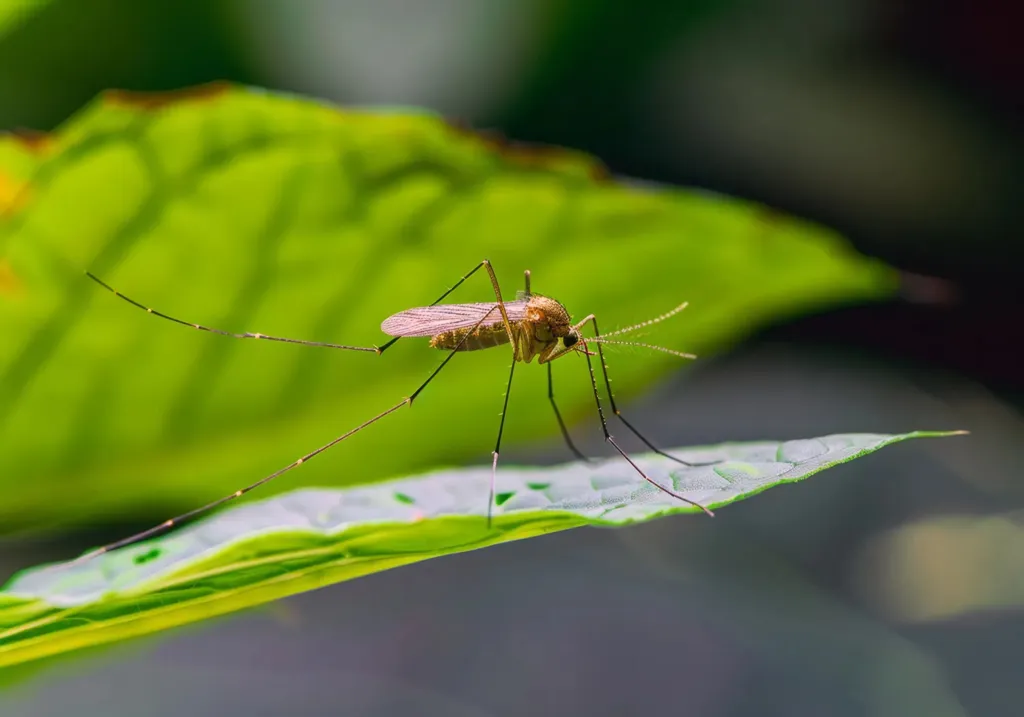
Mosquitoes are the most common source of confusion during swarms. The clearest distinction: mosquitoes bite, mayflies can’t. At rest, mosquitoes fold their wings flat against their body while mayflies hold theirs upright like small sails. Up close, the mosquito’s needle-like proboscis is unmistakable. Mayflies have nothing comparable.
When to Call a Pest Control Professional
For most homeowners, a mayfly swarm is an annual inconvenience that resolves itself within a few days. But there are situations where professional guidance adds real value:
- Severe, recurring swarms that disrupt outdoor life year after year despite your own management efforts
- Commercial properties where insect accumulation creates safety hazards on walkways, parking areas, or storefronts
- Any uncertainty about whether you’re dealing with mayflies or disease-carrying mosquitoes
The team at Plant It Earth can assess your specific situation, identify contributing factors, and advise on an integrated approach that fits your property and location.
Mayfly Questions & Answers
-
Why are they attracted to artificial light?
Mayflies use natural light to orient themselves. Artificial sources disrupt that navigation system and draw them in.
-
Can mayflies infest my home?
No. They don’t breed indoors, have no interest in anything inside your house, and die quickly.
-
Do they damage lawns or plants?
Adult mayflies can’t feed at all, so no. There’s no plant or turf damage to worry about.
-
How long does a swarm last?
Typically one to three days at peak intensity, though some emergences stretch toward a week when multiple species are hatching in sequence.
-
Aren't they a sign of dirty water?
Actually, the opposite. Mayflies are sensitive to water quality and generally thrive only in cleaner, healthier waterways.
Flying Insects Nearby? Give Us a Call
Mayflies are a temporary nuisance. Adjust your lighting, clean up quickly, and give it a couple of days. The swarm will resolve on its own.
But if you’re not sure whether what you’re dealing with is mayflies or something more problematic like mosquitoes, or if pests of any kind are making it hard to enjoy your outdoor spaces, Plant It Earth is ready to help.
We build seasonal pest management plans tailored to your specific property and location, and we proudly provide lawn care and pest control services in Sarasota and lawn care and pest control services in Tampa. We’ve helped your neighbors enjoy picture-perfect lawns, and we can help you, too!
Blog Contributor: Brandon Batchelder
Brandon Batchelder serves as the Bradenton Branch Manager for Plant It Earth, with 11 years of experience. He is a Certified Pest Control Operator in Lawn and Ornamental, as well as General Household Pest and Rodent Control. His professional perspective is shaped by team development, customer satisfaction, business growth, and helping employees succeed both personally and professionally.