PIE responds quickly, takes the situation seriously, and handles bee removal responsibly. Bees play an important role in the environment, so when relocation is possible, we lean toward humane outcomes while still putting your safety first.


PEST CONTROL
PIE responds quickly, takes the situation seriously, and handles bee removal responsibly. Bees play an important role in the environment, so when relocation is possible, we lean toward humane outcomes while still putting your safety first.
It’s never been easier to have a beautiful lawn. Call today to lock in your savings!
Get your lawn back on track with one FREE application!*
Opt into our text messaging platform to begin your program and schedule with us today!
When bees show up on your property, it can feel stressful fast, especially if they’re near a front door, patio, pool area, or anywhere kids and pets hang out. In Tampa’s warm weather, swarms can settle quickly, and if they find a cozy spot in a soffit, wall void, or roofline, you’re suddenly dealing with something much bigger than “a few bees outside.”
We don’t believe in unnecessary killing. When the situation allows, we focus on live removal and relocation, using methods that aim to protect:
We approach each job based on the location, the risk level, and what’s safest for the people on the property.
 Children and pets
Your home and surrounding structures
The bees themselves, whenever feasible
Children and pets
Your home and surrounding structures
The bees themselves, whenever feasibleSwarms are usually temporary groups of bees searching for a new home. The problem is that “temporary” can turn into “inside your house” if they settle into a wall, attic, or soffit. Swarm removal is often time-sensitive, and acting quickly can prevent the situation from becoming a structural hive.
An established hive is different. If bees are nesting in or on a structure, removing the bees without addressing the hive can lead to repeat problems. Proper hive removal matters because leftover comb and hive material can attract pests and increase the chance of new colonies moving in later.
We commonly handle hives in:
- Soffits and rooflines
- Wall voids and siding areas
- Garages, sheds, and exterior structures
- Attics and eaves
- Trees and fence lines (when safely accessible)
Some situations need faster action, especially in high-traffic areas like business entrances, community spaces, schools, or anywhere stings would create a serious risk. When availability allows, we prioritize urgent cases and guide you on what to do while you wait.
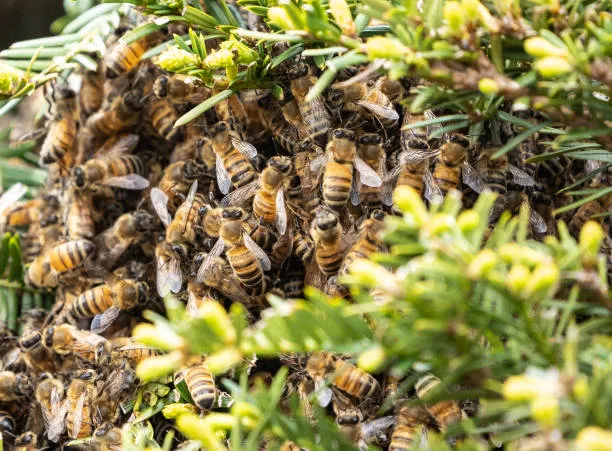
Bee problems are easy to underestimate. DIY attempts can make bees more defensive, increase stinging risk, and push colonies deeper into structures. Even worse, incomplete removal often leads to repeat issues.
Escalated stinging risk
Hidden hive growth inside walls or rooflines
Structural complications and expensive repairs
Repeat infestations from leftover hive materialPricing depends on what we’re dealing with:
Swarms are typically quicker and easier to access
Established hives usually take more time and careful removal
Location, accessibility, colony size, and structural involvement all affect cost
We’ll explain the scope upfront so you know what to expect and why.
Step
1
Initial inspection
We assess the location, the activity level, and the urgency.
Step
2
Identify the situation
We determine whether it’s a swarm or an established colony and where they’re nesting.
Step
3
Safe containment plan
We plan the removal to reduce risk to people, pets, and the structure.
Step
4
Live removal or relocation when possible
When feasible, we prioritize humane handling and relocation.
Step
5
Hive removal and cleanup
If there’s hive material, we address it to reduce reinfestation risk.
Step
6
Prevention recommendations
We point out likely entry points and practical steps to help keep bees from returning.
Some guidelines and best practices apply depending on the situation. We approach removal responsibly and aim for humane outcomes when possible.
We avoid unnecessary killing and prioritize relocation when feasible, while keeping safety as the top priority.
We prioritize urgent situations when availability allows, especially near entryways, children, or high-traffic areas.
They can if entry points stay open or hive material remains. Proper removal and prevention steps help reduce repeat issues.
Yes. We’ll give simple instructions so pets and family members stay safe before, during, and after service.
If you’re seeing heavy bee activity or you suspect a hive in a wall, soffit, or roofline, don’t wait for it to get worse. Contact PIE for a quick evaluation and a safe removal plan that protects your home, your people, and the environment.